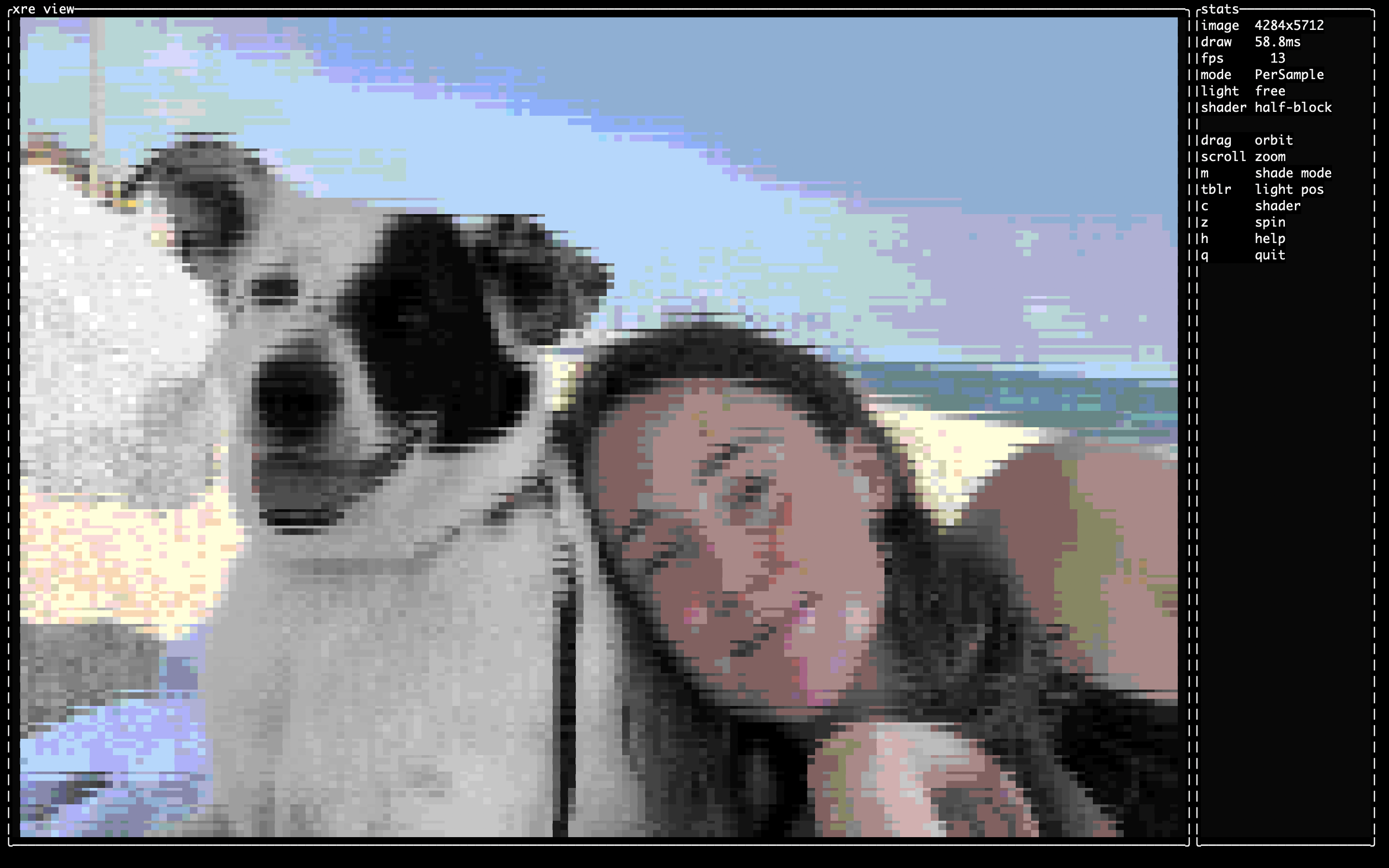
As modern software development and agentic workflows increasingly center around the command line, the visual and interactive constraints of the terminal have become a bottleneck. We are seeing a resurgence of terminal-first tools, but the UI layer has largely lagged behind.
Our analysis starts with a practical observation: tools like Claude Code and other autonomous agents are proving that power users—programmers, system administrators, and hackers—want their workflows situated natively in the shell. However, returning to the terminal should not mean abandoning modern UI/UX principles. xRenderEngine provides a structural rethink of what a terminal user interface (TUI) can be, fusing full 3D software rendering with traditional terminal UI components.
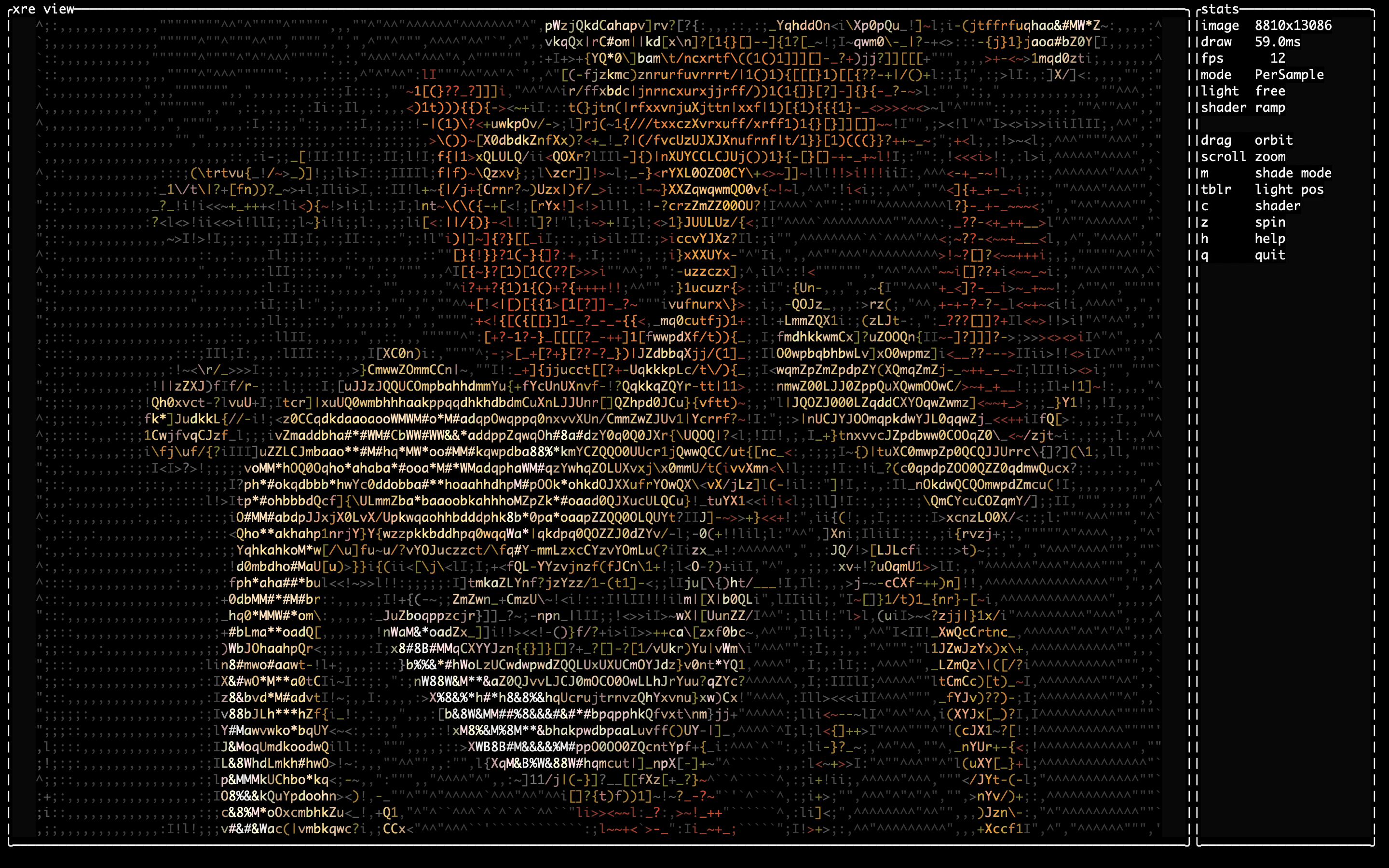
xRenderEngine is a dependency-minimal, Rust-based engine that renders real 3D scenes and complex TUI dashboards directly in the terminal environment. Crucially, it operates without an async runtime and without GPU acceleration, relying entirely on highly optimized software rendering.
The architecture is split into a modular crate system. At its foundation are xre-core for mathematics and xre-term for raw terminal capabilities and input handling. Above this sits xre-tui for layout, panels, and widgets, and xre-render for software 3D rasterization. The ecosystem is rounded out by xre-cello (scene graphs, OBJ/MTL loading) and xre-engine (ECS using hecs, game loops, and input mapping).
The output is an environment capable of running full TUI dashboards, fixed-timestep game loops, and 3D model viewers directly inside standard terminal emulators.
Why it is different
Most terminal graphics libraries treat the terminal grid as a low-resolution pixel array, mapping one character to one pixel. xRenderEngine explicitly rejects this model.
Characters are not pixels: The engine rasterizes each terminal cell at a sub-cell resolution (defaulting to 2×4 samples). These samples are then resolved by pluggable cell shaders that translate the raw data into luminance ramps, 6-D shape vectors, Braille, or half-block Unicode characters. This allows it to move far past the traditional "ASCII art" aesthetic into genuine shape representation.
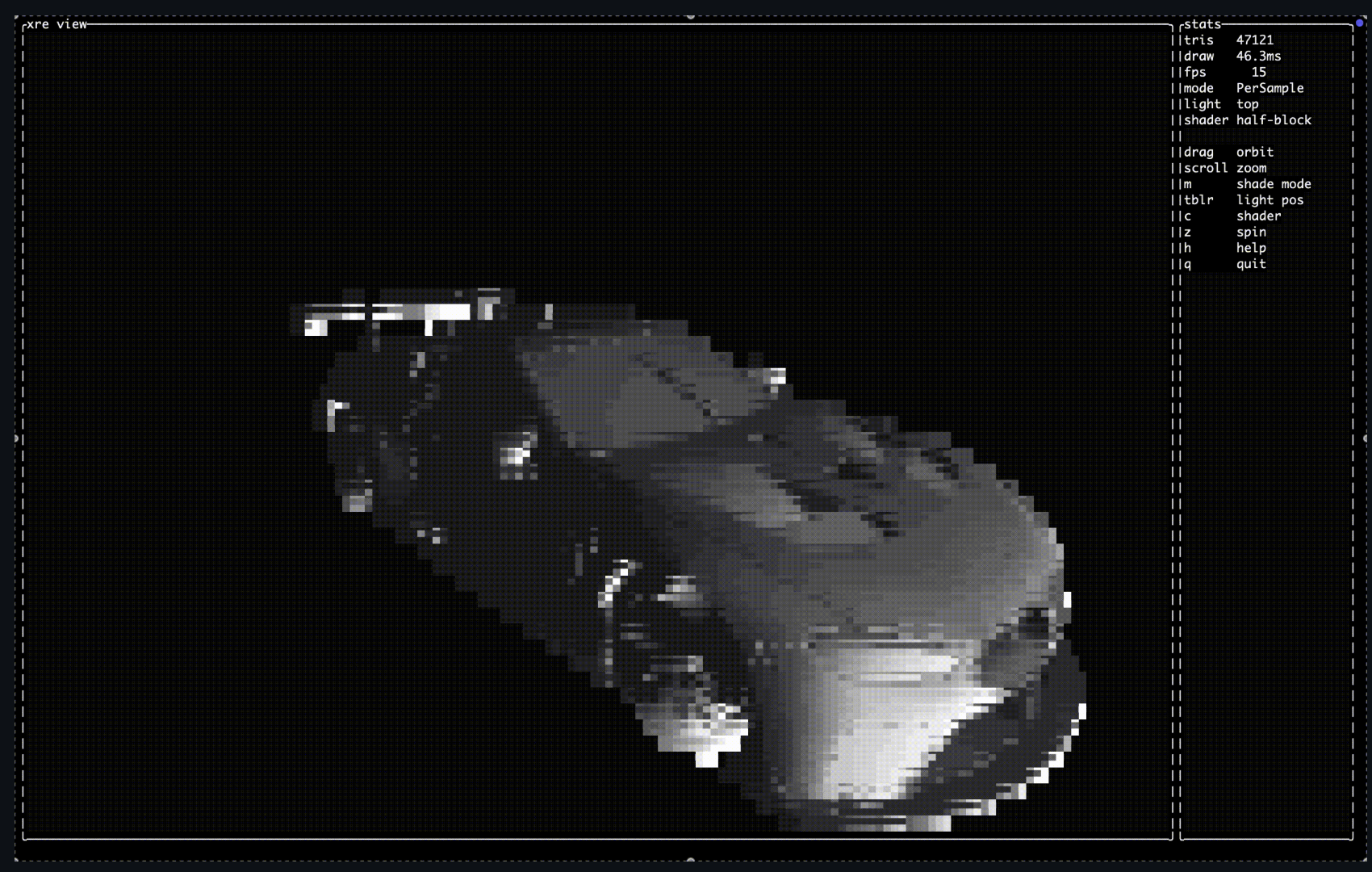
Unified TUI and 3D layers: Rather than building an isolated 3D view, xRenderEngine allows 3D scenes (Viewport3D) and TUI elements (sparklines, gauges, scrolling logs) to share a single cell buffer and a single diffed presenter. You can place a spinning, lit 3D model right next to a live scrolling log of system telemetry.
Graceful degradation: Terminal environments are highly fragmented. The engine detects terminal capabilities at runtime and degrades gracefully from truecolor (24-bit) down to 256-color, 16-color, and finally plain ASCII, ensuring compatibility without developer overhead.
What it does really well
xRenderEngine excels in environments where performance, footprint, and deployment speed are critical.
- Micro-footprint deployments: With a target release binary of under 5 MB and a cold start time of less than 50 milliseconds, it is exceptionally lightweight. It is designed for immediate execution without the bloat of web frameworks or heavy GUI toolkits.
- Complex data visualization: By combining
xre-tuiandxre-render, developers can build intricate dashboards that visualize multi-dimensional data or spatial telemetry in real-time. - Row-parallel performance: Despite running entirely on the CPU, the engine achieves high frame rates through row-parallel rasterization (via
rayon), keeping the terminal responsive even during intensive 3D rendering or swept collision calculations.
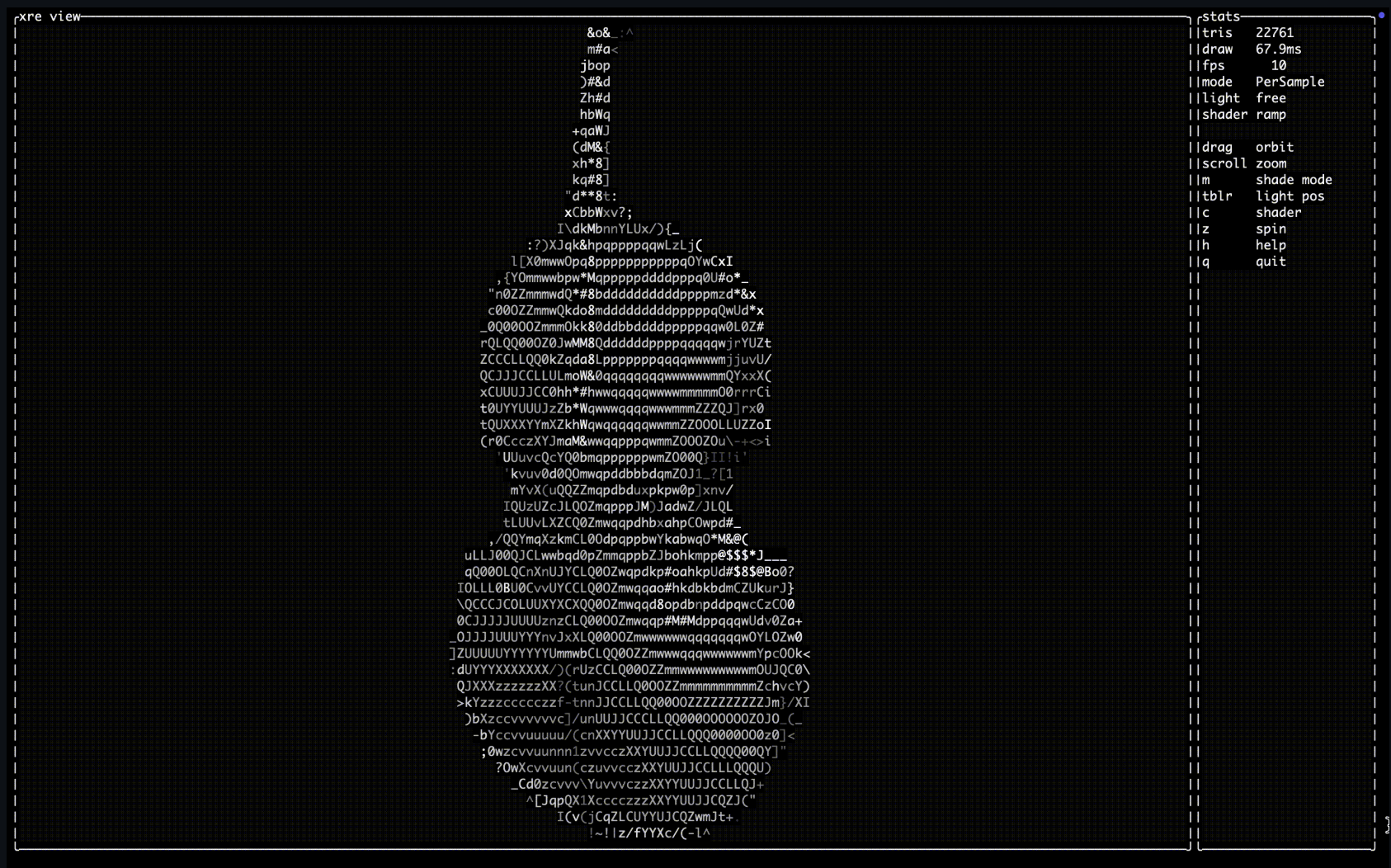
The software industry is experiencing a cyclical return to the terminal. As AI models write code, debug systems, and execute complex operations autonomously (as seen in tools like Claude Code), human operators need interfaces that live alongside these agents without context-switching to a web browser.
However, the terminal has historically been viewed as a utilitarian, visually hostile environment. The mission behind frameworks like xRenderEngine is to prove that terminal software can be beautiful, responsive, and spatially aware. System administrators monitoring server clusters, security researchers navigating complex networks, and developers orchestrating AI agents all deserve a first-class user experience.
We can strive to build frameworks that make rich applications and games accessible over SSH, deployable in milliseconds, and universally compatible across operating systems. By bringing modern rendering techniques to the command line, we close the gap between the speed of the terminal and the visual utility of native applications.
By k-lab